You would like to book a massage in Ghent, but there are two treatments to choose from: Traditional Thai Massage and Thai Oil Massage.
Which one is right for you?
Both offer time for yourself and personal attention, but the experience is different. Traditional Thai massage focuses on pressure, stretching and movement. Thai oil massage uses oil to create smoother, flowing movements.
At Baan Sabai, the best choice starts with what you enjoy — and how you would like your massage to feel.
What is Traditional Thai Massage?
Traditional Thai Massage combines focused pressure with assisted stretches and controlled movements.
Rather than relying mainly on long, gliding strokes, the treatment brings pressure and movement together across different areas of the body.
It can feel more active than a massage with oil. During assisted stretches, the therapist guides the movement while you relax as comfortably as possible.
You do not need to be particularly flexible or experienced in massage. Tell Chonlada what feels comfortable, and let her know if you would prefer less pressure or a smaller range of movement.
Who might enjoy Traditional Thai Massage?
Traditional Thai massage may suit you if you:
- Enjoy a combination of pressure and stretching.
- Prefer a massage with movement rather than mainly flowing strokes.
- Like a more active treatment experience.
- Want personal attention across several areas of the body.
An active treatment does not need to be uncomfortable. Stronger pressure is not automatically a better massage.
What is Thai Oil Massage?
Thai Oil Massage uses massage oil to allow smoother, continuous movements across the body.
At Baan Sabai, this treatment is presented on the service page as Thai Aromatherapy Massage. It combines flowing massage techniques with pressure adapted to your preferences.
Compared with Traditional Thai Massage, the overall experience is usually less focused on assisted stretching and more focused on a steady, relaxing rhythm.
Who might enjoy Thai Oil Massage?
Thai oil massage may suit you if you:
- Enjoy smooth, flowing massage movements.
- Prefer less emphasis on stretching.
- Want a quiet pause after work, travelling or sightseeing.
- Like the feeling of a massage with oil.
Oil massage does not automatically mean very light pressure. You can still discuss whether you prefer a lighter or firmer touch.
If you have fragrance sensitivities or product allergies, mention them before your appointment.
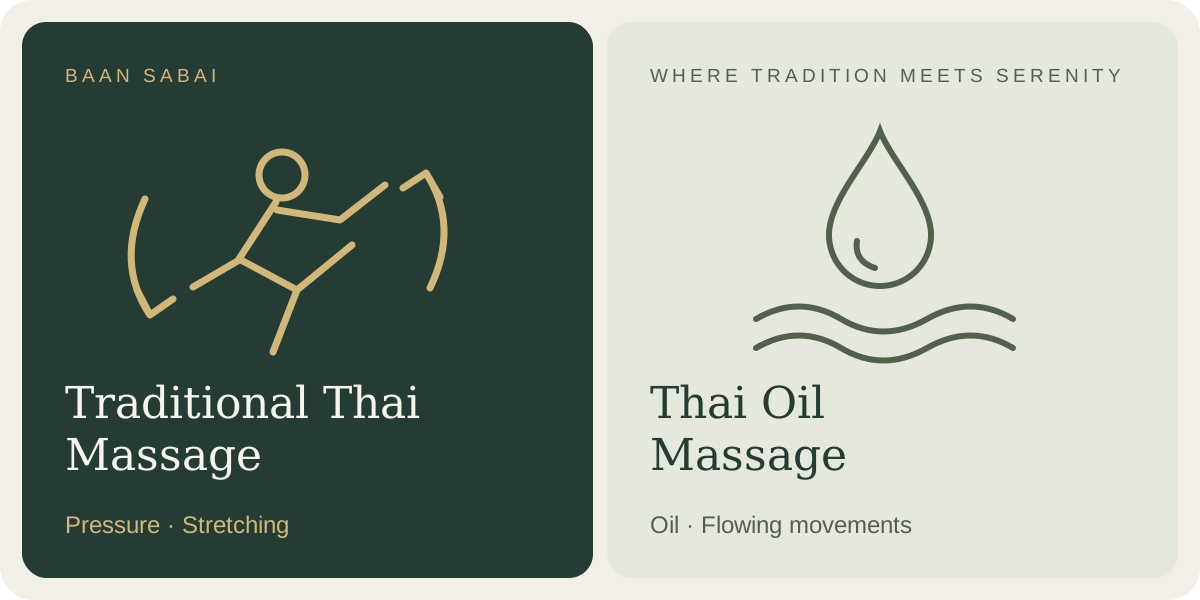
Traditional Thai Massage and Thai Oil Massage compared
| What to compare | Traditional Thai Massage | Thai Oil Massage |
|---|---|---|
| Main techniques | Focused pressure, assisted stretching and controlled movement | Flowing movements with massage oil |
| Overall feeling | More active, with changes in movement and position | Smoother and more continuous |
| Use of oil | Oil is not the defining part of the treatment | Oil allows gliding massage movements |
| Stretching | A central part of the experience | Less emphasis on assisted stretching |
| Pressure | Adapted to your comfort | Adapted to your comfort |
| Personal preferences | Discuss pressure and comfort with movement | Discuss pressure, fragrances and product sensitivities |
These differences describe the general character of each treatment. Your appointment should still reflect your individual preferences.
Which massage should you choose for your first visit?
Start with a simple question: would you enjoy stretching and movement, or would you prefer flowing massage strokes?
If pressure and assisted stretching appeal to you, Traditional Thai Massage may be the better fit.
If you prefer smoother movements and less stretching, Thai Oil Massage may feel more familiar.
Neither treatment is automatically the right choice for every first-time guest. You do not need to choose based on how much pressure you think you should tolerate.
If you are unsure, contact Baan Sabai before booking. A short conversation about your preferences can help you choose.
Can both be full body massages?
Yes. Both styles can work across several major areas of the body rather than focusing on only one zone.
Depending on the treatment and your preferences, attention may be given to the back, shoulders, neck, arms, hands, legs and feet.
The time available and any areas you would like to focus on influence how the session is organised.
Read our guide, Full Body Massage in Ghent: What Does It Include?, for more detail.
What if you are booking after sightseeing in Ghent?
After a day exploring the city, choose the experience you would most enjoy.
Some visitors prefer the pressure and movement of Traditional Thai Massage. Others want the flowing rhythm of Thai Oil Massage.
Walking around Ghent does not automatically make one treatment more suitable than the other. Your comfort and preferences remain the starting point.
For ideas on fitting a treatment into your city break, read Visiting Ghent? Relax After a Day of Sightseeing.
Personal attention from Chonlada
At Baan Sabai, choosing a treatment is the beginning of the conversation.
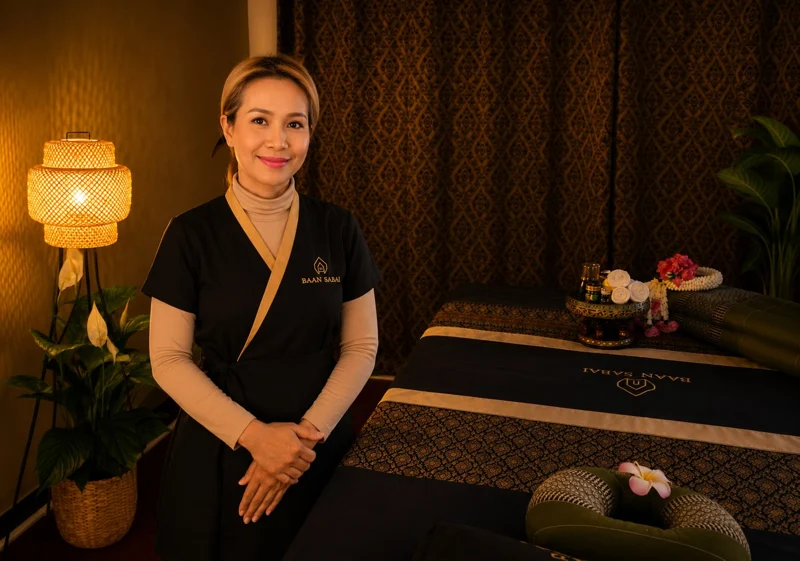
Chonlada, the massage expert behind the studio, welcomes your preferences about pressure, movement and areas that need more or less attention.
You can speak up during the massage, too. There is no need to stay silent if you would like something adjusted.
Her commitment to developing her craft is reflected in Baan Sabai’s philosophy:
“We never stop learning and gaining experience in massage therapy.”
If you have an injury, are pregnant or have health concerns that could affect your treatment, contact the studio before booking to discuss suitability.
Choose your massage in Ghent
Whether you prefer pressure and stretching or flowing movements with oil, Baan Sabai offers a calm setting and an individual appointment.
You will find the studio at Roeispaanstraat 17, 9000 Gent, near Gent-Sint-Pieters station.
Visits are by appointment only. Choose your treatment and check the available times online.
Frequently Asked Questions
What is the main difference between Thai massage and Thai oil massage?
Traditional Thai massage combines focused pressure, assisted stretching and controlled movements. Thai oil massage uses oil for smoother, flowing movements, with less emphasis on stretching.
Is Traditional Thai Massage always stronger?
No. The techniques differ, but pressure can be adapted in both treatments. Traditional Thai Massage does not need to involve the strongest possible pressure.
Can I ask for firm pressure during an oil massage?
Yes. Discuss your preference with Chonlada. Using oil does not automatically mean the massage must be very gentle.
Which treatment is better for a first massage?
It depends on your preferences. Choose Traditional Thai Massage if you enjoy the idea of pressure and stretching, or Thai Oil Massage if you prefer flowing movements. Contact the studio if you are unsure.
Are both treatments full body massages?
Both can work across several areas of the body. The exact session depends on the treatment, its duration and your individual preferences.
Do I need to book in advance?
Yes. Baan Sabai welcomes guests by appointment only. Use the online booking page to choose your treatment and see available times.